What are peptides used for in dogs?
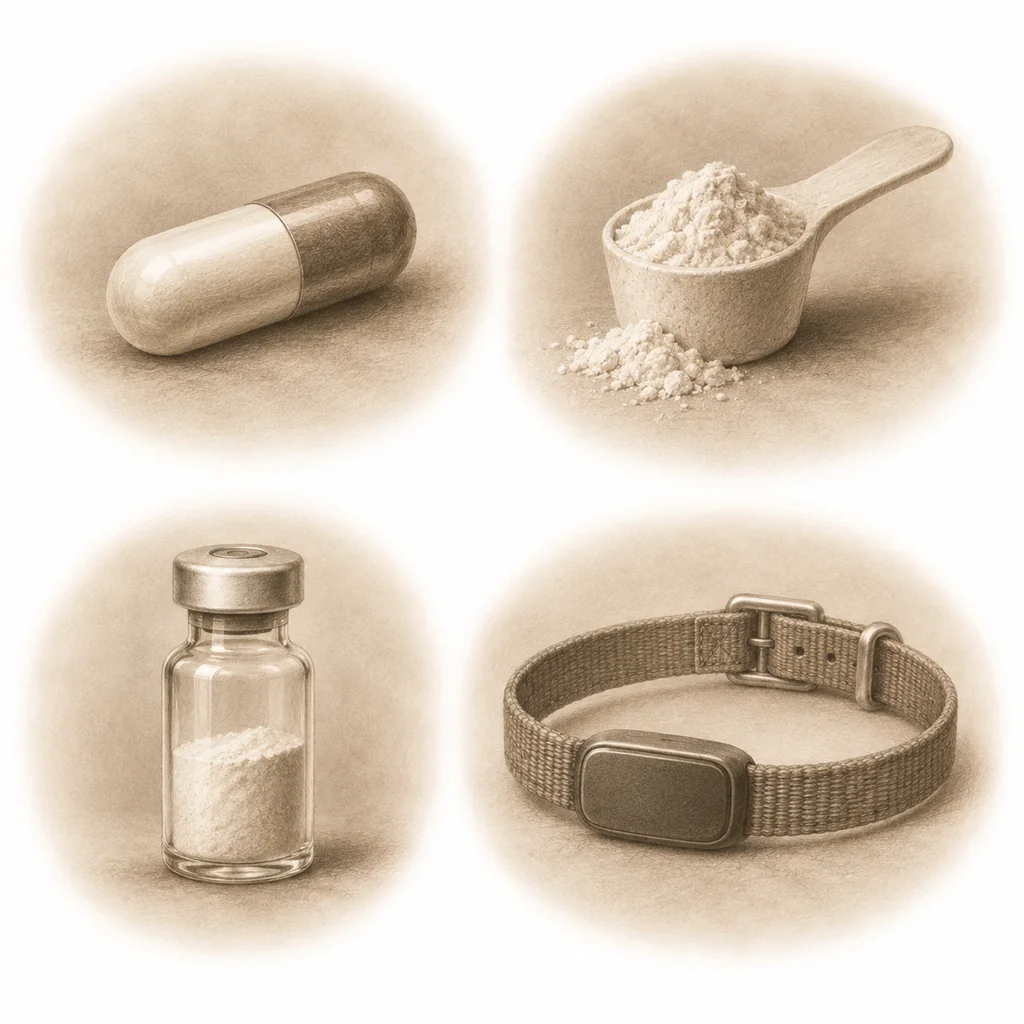
Start with the thing you want to change: a limp, an itchy evening or an urgent trip outside. Here’s why owners bring up BPC-157, TB-500 and KPV.
When a cattle dog’s sore knee kept flaring up, his person asked about two peptides in the same Reddit post. In another conversation, a dog owner wanted to know if KPV had helped with scratching. Those are different questions, even when the names on the bottle overlap.
What is a peptide?
A peptide is a short chain of amino acids. The particular chain matters. A person asking about a peptide for a sensitive gut may mean something quite different from someone looking for help after a knee injury.
What benefits are dog owners hoping for?
| Peptide | Possible benefit | What owners are actually discussing |
|---|---|---|
| BPC-157 | More comfortable movement during recovery; possible support for gut-lining repair. | A senior dog whose owner noticed a longer walk, alongside ongoing pain treatment. |
| TB-500 | Soft-tissue repair after injury. | Whether pairing it with BPC-157 might help a dog with a sore knee. |
| KPV | Calming gut inflammation. Some owners also hope for less itching. | An owner tried a combination and reported on movement; readers asked for an update on skin. |
| GHK-Cu | Skin and wound repair. | Whether a copper peptide in a recovery capsule is worth paying for. |
| Thymosin alpha 1 | Less joint swelling in rats with inflammatory arthritis. | Could it help a stiff older dog? We found no controlled dog trial measuring that. |
These are reasons people are interested. A dog taking a longer walk or sleeping through the night is something an owner can report firsthand. Whether a particular ingredient made that happen takes more to untangle.
What about GHK-Cu?
In English Pointers, researchers found more collagen in paw pads treated with a copper tripeptide. Read the GHK-Cu guide for dog owners.
This copper peptide appears in some recovery blends for dogs. Skin and tissue repair are the proposed benefits. A capsule raises a separate question about how much of the intact peptide gets through digestion. We looked at that claim in our comparison of four dog peptide products.
What did owners actually notice?
Max was walking without a limp nearly two months after his knee injury. His owner had added peptides only a week earlier. Bruce Wayne was moving better too, though his owner still saw him limp on some walks. For a skin story, Ginger’s owner noticed she was chewing her paws less.
Can a vet arrange compounded BPC-157?
A vet can assess whether a patient-specific preparation is appropriate and available when approved medicines cannot appropriately meet your dog's needs. FDA guidance on animal-drug compounding describes an enforcement policy with conditions; state law and pharmacy decisions also matter.
For an example of what a visit can look like, Dr. Sarah Meintel at Earth Medicine reviews the pet’s records before a peptide consultation. If she recommends a peptide afterward, the practice says it supplies the product directly. Read Earth Medicine’s consultation guide.
Watson’s case report describes experimental use, including research-supplier and human oral products. That history is not a guarantee about a bottle bought online today. Know who prepared any product proposed for your dog and follow the prescribing team's instructions.
Are peptides steroids, and are they safe?
Peptides are amino-acid chains. Steroids belong to a different chemical family. Neither name alone tells you whether a product suits your dog. The particular ingredient, route, quality, other medicines and length of use matter. Long-term oral BPC-157 use in senior dogs is not settled by injection studies.
Human flavored powders and gummies need an ingredient check. Xylitol is poisonous to dogs. If a bottle is already in your cupboard, our product review compares single-peptide capsules and blends.
Pick the activity or symptom you want to improve and take the exact product to the vet who knows your dog. "Getting up is still hard" is a more useful starting point than wanting to add a peptide simply because the category sounds promising.
Sources
- FDA guidance on animal-drug compounding fda.gov
- Read Earth Medicine’s consultation guide earthmedicinevet.com
- Watson’s case report ahvma.org
- Xylitol is poisonous to dogs fda.gov